
Across the world, both the oldest and the largest democracies are navigating a period of deep uncertainty. Democratic values such as fraternity, equity, and justice are under strain, while welfare-state ideals continue to erode. Alongside this, the climate crisis grows more urgent. Fossil fuels still outpace green energy, and the possibility of global temperatures rising beyond 1.5°C is no longer abstract.
The consequences are already visible—rising sea levels, flooding cities, extreme heat, declining food production, and increasing loss of livelihoods. Most troubling is the imbalance of impact: those who contribute the least to these crises, particularly the urban and rural poor, are often the ones who suffer the most.
This reality forces us to confront a fundamental question: what kind of world are we leaving behind for future generations? And just as importantly, who will help shape a more just and resilient one?
Increasingly, the answer lies with young people—and with a renewed understanding of citizenship. Across contexts, moments of social transformation are often driven by youth who are alert to injustice, informed about their realities, and active within their communities. These are ACTiZENS in practice, as Desh Apnayen Sahayog Foundation calls them.
India stands at a critical juncture. With nearly 370 million young people between the ages of 15 and 29, the country holds immense promise. Youth is not merely a preparatory phase before adulthood; it is a period of active engagement with society. It is when individuals begin stepping beyond family structures, encountering difference, and forming opinions shaped by both inherited values and lived experiences.
This phase is also deeply formative. Young people grapple with identity, belonging, and responsibility. Their confidence is still developing, their curiosity is strong, and their sense of fairness often acute. Recognising them as independent thinkers—and respecting their questions and viewpoints—is not simply encouraging; it is a democratic necessity.
As young people move towards economic independence and civic responsibility, they must be equipped not only with skills for employment, but with the capacity to think critically, make informed decisions, and act with social awareness. This is where ACTiZENship begins to take shape.
At the age of eighteen, young Indians gain one of democracy’s most powerful tools: the right to vote. Yet meaningful participation requires far more than eligibility. It depends on the ability to seek reliable information, evaluate competing narratives, and make thoughtful choices. In an era of information overload and rapid misinformation, these capabilities are essential—not only for personal growth, but for the health of democratic systems.
Traditional education systems, however, often fall short. Questioning is discouraged, debate is constrained, and learning is frequently reduced to memorisation. What young people need instead are opportunities to ask difficult questions, analyse realities, reflect collectively, and engage responsibly with the world around them. The ability to say “I don’t know yet, but I will find out” is not a weakness—it is the foundation of critical thinking.
To take independent, informed decisions is not merely a personal skill; it is a civic capability. It lies at the heart of responsible citizenship.
ACTiZENS are not defined by titles or formal authority. They are individuals who recognise their interconnectedness with society and take responsibility for the well-being of their communities. They understand that democracy is sustained not only through institutions, but through everyday participation, ethical choices, and collective care.
Creating such citizens requires learning environments that bring together youth from diverse social, linguistic, educational, and economic backgrounds. When young people engage across differences of caste, class, gender, religion, and language, they learn to navigate disagreement, appreciate multiple perspectives, and build solidarity. These experiences cultivate empathy and inclusion—essential foundations for democratic leadership.
Participation, however, must be practised. Community-based learning spaces that emphasise dialogue, reflection, and collaboration allow young people to experience democracy as a lived process. Diversity within these spaces becomes a source of learning rather than division.
One such space is created through the work of my organisation Partners for Urban Knowledge, Action and Research (PUKAR), whose Youth Fellowship programme has been nurturing civic leadership since 2005. Grounded in Professor Arjun Appadurai’s idea of the “Right to Research,” the Fellowship democratises knowledge-making by enabling young people—across formal and informal educational backgrounds—to become researchers of their own realities. Drawing from Socratic dialogue and later pedagogies articulated by Paulo Freire, the programme follows an alternative approach of Community-Based Participatory Action Research, rooted in the principle of karake sikho—learning by doing. In bringing together youth from diverse social contexts to engage with real community issues, the Fellowship creates a cross-disciplinary, problem-oriented space where participation is not taught, but practised.
Two simple principles quietly guide these learning spaces: “You are not wrong, just different,” and “We agree to disagree, but we remain friends.” These are not slogans, but lived practices. They allow disagreement without rupture, difference without hierarchy, and dialogue without the need for uniformity.
Learning in such spaces is often uncomfortable. It challenges assumptions and exposes privilege. Yet it is precisely this discomfort that leads to growth. Young people begin to recognise how context—where one is born, educated, and employed—shapes worldview and opportunity. This awareness strengthens empathy without weakening conviction.
Equally important is engagement with real-world contexts. When youth step into neighbourhoods, listen closely to lived experiences, and document everyday realities, abstract ideas such as justice, equity, and participation become tangible. Learning shifts from theory to relationship, from observation to responsibility.
What ACTiZENship Looks Like on the Ground
These ideas come alive most clearly in lived experiences—when young people move from reflection to participation, and from learning to action. The stories below offer a glimpse into how ACTiZENship takes shape in everyday contexts, shaped by place, relationships, and collective effort.
Kishan Dhabade (name changed)
A photo essay created as part of PUKAR’s Youth Fellowship programme captures the dual life of migrant construction worker Kishan. By day, he helps build pristine, luxury buildings across the city. By night, he returns to his modest, makeshift home in Thane.
Anchored in his own lived contradictions and shaped by research and photography skills developed through the fellowship, Kishan and his group documented these realities from within. Their work extended beyond storytelling. Using advocacy skills they had learned, the group engaged collectively and succeeded in securing access to drinking water that had earlier been denied by a dishonest contractor.
Saba Kazi (name changed)
Once taunted for coming from what many dismissively call “Mini Pakistan,” Saba spent much of her early life negotiating questions of belonging. As a youth fellow, she spent a year documenting how outsiders perceived Mumbra—a Mumbai suburb often reduced to narrow stereotypes, particularly in the shadow of the 1992–93 Bombay riots.
Through interviews and discussions with non-residents, Saba and her peers worked to move beyond these narratives. Equipped with research skills and deeper contextual understanding, she emerged more confident and secure in her identity. Today, she articulates informed arguments about her community while navigating her place in the city with clarity and conviction.
Nishadh Kamble (name changed)
Nishadh belongs to a migrant Dalit community from Bihar, Uttar Pradesh, and Odisha. A critical moment came when he realised that his mother and sisters often skipped dinner because they lacked access to toilets. Disturbed by this reality, Nishadh and four peers undertook systematic research within their community.
After collecting data, they approached the local corporator and received limited funding. The community then mobilised, contributing both labour and additional resources. Together, they constructed new functional toilets—ten for women and six for men. Tragically, soon after the work was completed, the settlement was demolished by builders, underscoring the harsh precarity that migrant communities continue to face in India’s cities.
These stories matter because they reveal how citizenship is practised in everyday contexts—through inquiry, collaboration, and care.
As Amartya Sen has observed, democracy is not only about elections; it is about strengthening each citizen’s capacity to participate meaningfully in social deliberation.
ACTiZENS embody this principle—not by waiting for change to arrive from elsewhere, but by beginning where they are, with what they have.
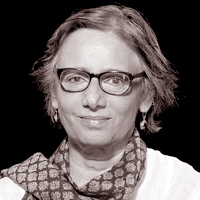
USA-trained faculty neonatologist by profession, Dr. Anita Patil-Deshmukh is the Director-Programs and Principal Investigator in Partners for Urban Knowledge Action and Research (PUKAR), which is an independent research collective and knowledge producing institution.