
Education’s Role in Fostering Active Citizens
I first met Pallavi when she was 14 and had joined Dream a Dream’s life skills programme at her school. She barely made eye contact while speaking to me. In 2014, she was selected to represent Dream a Dream at the FIFA Football Festival in Brazil. I remember wondering how she would navigate a global gathering of young people.
A few years later, she invited me to an event that was to take place in her community. Pallavi had persuaded local leaders in Bengaluru to transform a piece of land, once used as a garbage dumping ground, into a playground for children in her neighbourhood. I saw her onstage at the inauguration ceremony, the only young woman among a group of corporators and community leaders, confidently speaking about the importance of creating spaces where children could play.
Today, Pallavi works with 150–200 children in her community, using sports to help them build confidence, foster collaboration, and acquire life skills. Whenever I think about what it means to be an active citizen, I often think of young people like her and how someone’s transformation into a changemaker begins.
Active Citizenship Begins Within
My own journey towards becoming a more engaged citizen began with constant self-reflection. In 1999, I travelled to Finland as an exchange student. What struck me most was the dignity associated with every occupation and the way people related to one another with a deep sense of equality. That experience forced me to confront many of the assumptions I had unconsciously harboured while growing up in India. Working with young people and listening to their stories further changed how I understood dignity, empathy, and presence.
Active citizenship rarely begins with information alone. It begins with how we see ourselves and others. In our work with young people at Dream a Dream, we have repeatedly witnessed how powerful relationships can be. Sometimes, all it takes is one caring, non-judgemental adult who is willing to listen deeply. For Pallavi, life skills facilitators created this space.
When young people feel heard and respected, their confidence grows. Their sense of agency begins to emerge. They start to believe that their voice matters. They ask questions, take initiative, and begin to care about the world beyond themselves.
Many of the fractures we see in society today are not just political or institutional but deeply human. They live in our assumptions about caste, gender, class, and identity. They exist in the stories we inherit about who belongs and who does not. If we want more engaged citizens, we must create spaces where people can reflect on these inherited beliefs.
This kind of reflection is not always comfortable. It asks us to question the narratives we grew up with. It requires us to listen to very different experiences from our own. And sometimes, it needs us to acknowledge the privileges we did not realise we had. But it is necessary.
Without empathy and self-awareness, information cannot lead to meaningful participation in society.
Schools as Democratic Spaces
Education plays a critical role in nurturing these capacities. Democracy can be practised every day, such as in classrooms that hold space for students to feel safe and express their ideas; in families where differences are discussed with respect; and in communities where people listen to one another with curiosity rather than judgement.
This is why classroom conversations about elections, governance, empathy, and civic responsibility are so important. However, these conversations must go beyond simply teaching how institutions function. They must nurture the capacities that democracy depends on–the ability to listen empathetically, question respectfully, reflect deeply, understand diverse perspectives, and make ethical and collaborative choices.
When classrooms become spaces where students can explore different perspectives and engage in dialogue without fear, they begin to see themselves not as passive recipients of decisions but as participants in shaping their lives, relationships, and communities.
Becoming an engaged citizen is a lifelong journey of questioning our own assumptions, listening deeply to others’ experiences, and intentionally choosing, every day, to build a society where every individual is seen, heard, and valued. Active citizenship is not just about taking action but about the thought behind who we choose to become.
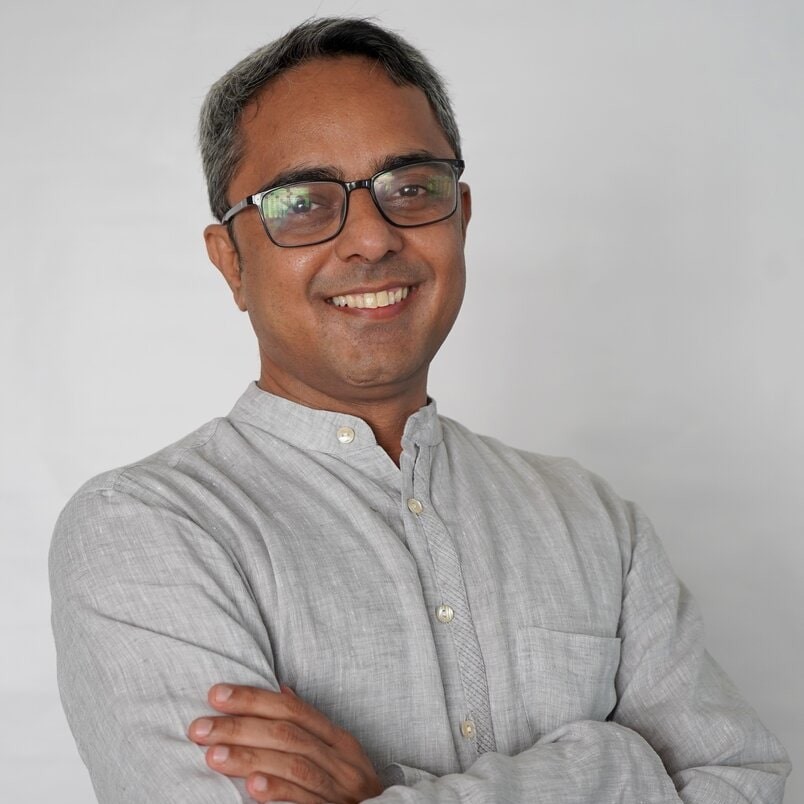
Mr. Vishal Talreja is an educator and social entrepreneur. He co-founded Dream a Dream in 1999 and The Cocoon Initiative in 2023. He has co-authored four research papers on life skills in the Indian context and written a range of articles, white papers, and policy briefs on education transformation.